

I will say this up front: I bought the DeWalt 20V MAX XR oscillating tool kit because I was tired of borrowing my neighbor's corded multi-tool every time I needed to cut a door jamb. Fourteen years into remodeling my 1962 ranch in Fresno, I have learned that the tool I reach for most is the one that is already charged and sitting on the pegboard. This one has been on my pegboard for a full year now, through a bathroom reno, a hallway floor, and more trim than I want to count. Here is what actually happened, including the parts that frustrated me.
The short version: it is a very good oscillating tool, and it is not the right tool for everyone. If you already own a DeWalt 20V MAX battery system, this kit makes sense. If you are starting from scratch, the battery cost changes the math. And if you expect it to replace a saw, you will be disappointed. I want to be honest about all of it, because most reviews read like the tool can do no wrong, and that has not been my experience.
The Quick Verdict
The DeWalt 20V MAX XR oscillating tool is a genuinely useful cordless multi-tool for DIYers who already own DeWalt batteries, with strong cutting control and a comfortable grip, but the kit's blade selection is thin and the battery adds real cost if you are new to the platform.
Amazon Check Today's Price →The multi-tool I keep reaching for in my garage workshop
After a year of weekend remodeling, the DeWalt 20V MAX XR is the oscillating tool that lives on my pegboard. It cuts flush, sands tight corners, and starts every time. Check today's price on Amazon to see what the kit includes.
Amazon Check Today's Price on Amazon →How I've Used It
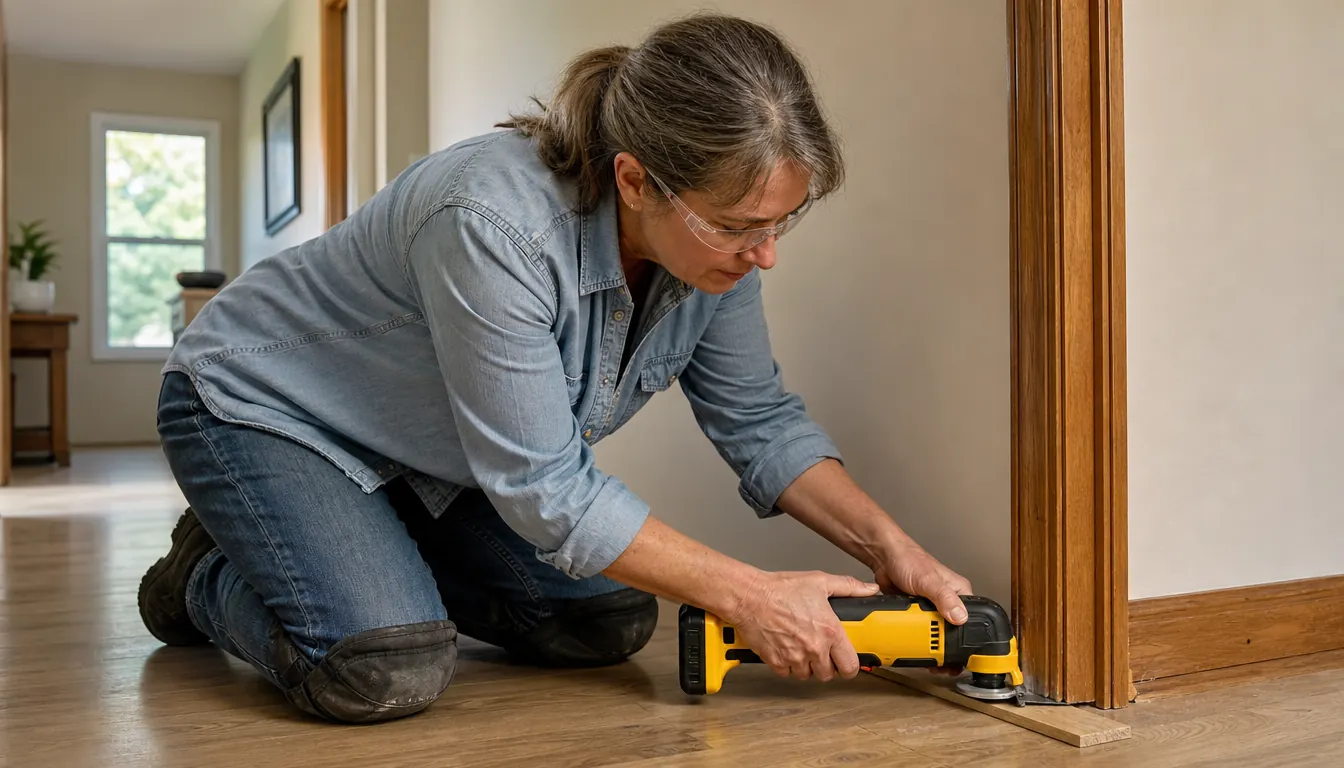
My workshop is a one-car garage with a folding work table, a sawhorse setup, and a pegboard wall. No big stationary tools, so everything I own has to earn its storage space. The DeWalt multi-tool earned its spot during the bathroom remodel last spring, when I needed to cut the bottom of a door jamb to fit new tile. That is the classic oscillating tool job, and it did it cleanly in about four minutes, no circular saw required. I remember standing there afterward thinking that the job would have taken me forty minutes with a handsaw and a prayer.
Since then I have used it for a hallway floor, where it trimmed the bottom of door casings so the new flooring could slide underneath. I have used it to cut PVC pipe behind a washing machine, to sand drywall patches in corners that a sanding sponge could not reach, and to notch a piece of baseboard around a stubborn outlet box. The tool does not care what material you feed it, as long as you match the blade. On the hallway job alone I cut twelve door casings in about an hour and a half, and the only thing I had to be careful about was not cutting into the flooring I had just laid.
The 3-speed dial matters more than I expected. For drywall and softwood I run it on speed one, which gives me control without tearing the material. For hardwood trim and PVC I move to speed two. Speed three is for aggressive cutting and sanding, and honestly I rarely need it. The variable speed trigger on top of the dial means I can feather the power, which is the difference between a clean cut and a gouge when you are working near a finished surface. I learned that the hard way on a window casing in the guest room, where I got impatient, bumped the speed up, and took a chunk out of the paint. My fault, not the tool's, but it taught me to respect the trigger.
What Nobody Tells You About the Kit
Here is the part that most reviews skip. The kit comes with a carrying bag, a couple of blades, and a battery, and the included blades are just okay. The universal blade that ships with it will cut wood and drywall, but it dulls faster than I expected, and the plunge blade is not the one I reach for now. I ended up buying a better flush-cut blade within the first month, and that is a cost most reviews do not mention. The universal blade started leaving burn marks on oak trim after about twenty minutes of cutting, and that was the moment I stopped pretending the included blade was going to last.
The other thing nobody tells you: the tool is heavier than it looks. With the battery attached it has real heft, and if you are cutting overhead or holding it at an awkward angle for ten minutes, your forearm will feel it. It is not a dealbreaker, but it is worth knowing before you buy. The grip itself is comfortable and the rubber overmold helps, but weight is weight. When I was cutting the door jambs in the hallway, I had to hold the tool sideways at shoulder height for most of an afternoon, and by dinner my arm was done.
Battery life is the third surprise. On a fresh 20V MAX battery, I can get through a full weekend of trim work, but the tool drains a battery noticeably faster than my drill does. If you only have one battery, you will want a second one charged and ready. The kit includes one battery and a charger, which is fine for most jobs, but plan accordingly. On the bathroom job I went through two full batteries in a day, mostly because I kept the speed up while sanding the drywall patches, and I was glad I had a spare on the charger.
The included blades are just okay. I bought a better flush-cut blade within the first month, and that is a cost most reviews do not mention.
Where It Shines
Flush cutting is the reason to own this tool. When I needed to cut the bottom of a door jamb for new tile, the oscillating action let me cut right up against the floor without damaging it. A circular saw cannot do that. A reciprocating saw cannot do that. The DeWalt did it in minutes, with a clean edge and no tear-out. I cut the jamb at about a quarter inch above the subfloor, which left just enough room for the tile and the thinset, and the cut line was straight enough that the base shoe covered it completely.
The tool-free blade change is genuinely tool-free. I have owned multi-tools where you need an Allen wrench to swap blades, and that is the kind of friction that makes you avoid the tool. With the DeWalt, you twist the lever, pull the blade, click in the new one, and you are done. When you are on a ladder or kneeling on a floor, that matters. I have swapped blades mid-job more times than I can count, and I have never once wished I had a wrench in my pocket.
The 3-speed control also makes it a better sanding tool than I expected. With a triangle sanding pad, it reaches into corners that a hand sander cannot, and the orbital action is smooth enough that I trust it on painted trim. I have used it to sand the edges of drywall patches and to smooth the inside of a window frame, and it did both without leaving gouges. On the bathroom ceiling patch, the triangle pad saved me from having to hand-sand a corner that was maybe two inches wide, and it took about a minute.
Where It Falls Short
The biggest limitation is the blade selection in the box. You get a universal blade and a plunge blade, and neither is the best version of what you will actually need. The universal blade works, but it dulls quickly on hardwood, and the plunge blade is not great for deep cuts. I replaced both within a month, and that is an honest cost to factor in. The plunge blade in particular struggled with a 2x4 I was notching for a vent pipe, and I ended up finishing that cut with a jigsaw instead.
The second limitation is the battery platform. If you already own DeWalt 20V MAX tools, this is a no-brainer. If you do not, the kit's price plus the cost of a second battery makes it a bigger investment, and you should compare it against a corded multi-tool that plugs into the wall and never runs out of power. For a homeowner who only needs it a few times a year, corded might be the smarter buy. I say that as someone who loves the cordless freedom, because I have also owned the corded version of this tool, and it has its own appeal.
The third limitation is noise and vibration. Every oscillating tool vibrates, but this one transmits a fair amount of buzz into your hand, especially at speed three. It is not uncomfortable for short bursts, but for a long sanding session I wear a work glove on my right hand. It is a minor complaint, but it is real. After about twenty minutes of sanding the hallway ceiling patches, my hand was tingling enough that I took a break, and that has not happened with every multi-tool I have tried.

The Blades Question
Let me be specific about blades, because this is where I see the most confusion. The DeWalt uses standard oscillating tool blades with the universal fit, so you are not locked into DeWalt-brand blades. That is good news. I have used blades from a couple of different brands, and they all fit fine. The tradeoff is that blade quality varies a lot, and cheap blades dull fast and cut slow. I bought a three-pack of bargain blades once, and the first one was dull before I finished a single door casing.
For flush cutting door jambs and baseboards, I now use a carbide-tipped flush-cut blade, and it has lasted through an entire hallway floor without needing replacement. For sanding, the triangle pad that comes with the kit works, but the hook-and-loop backing wears out eventually, and replacement pads are easy to find. For grout removal, which I have done once, you want a dedicated grout blade, and it will wear out quickly, so buy a couple. I learned that the hard way on a shower wall, where one grout blade got me through maybe six feet of grout before it gave up.
My advice: budget for a better blade up front. The tool itself is excellent, but the included blades are the weakest part of the kit, and upgrading them makes the whole experience noticeably better. A good carbide blade costs more than a bargain blade, but it lasts many times longer, and it cuts faster the whole time it is working. That is the kind of math that makes sense to me after a year of using this tool almost every weekend.
What I Liked
- Flush cuts door jambs and casings cleanly, right up against the floor
- Tool-free blade changes that actually work one-handed
- 3-speed dial plus variable speed trigger gives real control on different materials
- Cordless freedom is genuinely useful for a house with no workshop
- Universal blade fit means you are not locked into one brand of blades
Where It Falls Short
- Included blades are mediocre and dull fast on hardwood
- Heavier than it looks, especially with the battery attached
- Drains a battery noticeably faster than a drill does
- Vibration at speed three is tiring for long sanding sessions
- Battery platform cost is significant if you are new to DeWalt
Who This Is For
This DeWalt multi-tool is for the DIY homeowner who is actively remodeling, not the person who wants one tool to do everything. If you are cutting door jambs for new flooring, trimming baseboard, sanding drywall patches, or cutting PVC in tight spaces, this tool will save you hours. It is also for anyone who already owns DeWalt 20V MAX batteries, because the tool itself becomes a very reasonable addition to a system you already have. My husband and I have three DeWalt batteries between us, and I have never once had to stop a job to wait for a charge.
It is especially good for the kind of work I do: one room at a time, on weekends, in a house that is 60 years old and full of surprises. The cordless freedom means I can carry it from the garage to the bathroom to the hallway without dragging an extension cord, and the 3-speed control means I can match the tool to the material instead of fighting it. When the hallway floor job turned out to have a hidden layer of linoleum under the carpet, the multi-tool was the thing that let me cut through it at the doorways without tearing up the new flooring.
Who Should Skip It
Skip it if you are starting from scratch and only need an oscillating tool a few times a year. A corded multi-tool will cost less, never run out of battery, and sit in a drawer just fine between jobs. The cordless convenience only matters if you are using it often enough that the battery cost makes sense. I have a corded multi-tool in the garage too, and for a long afternoon of sanding, I will still reach for the corded one.
Skip it if you expect it to replace a saw. The oscillating tool is a detail tool, not a demolition tool. It cuts flush and it cuts in tight spaces, but it is slow compared to a circular saw or a reciprocating saw, and using it for big cuts will frustrate you. Know what it is for, and you will love it. Expect it to be something else, and you will be disappointed. I tried to use it to cut through a stubborn section of baseboard once, and I gave up after a minute and grabbed the reciprocating saw instead.
And skip it if you hate vibration. Every multi-tool vibrates, and this one is average in that department. If you have hand or wrist issues, try one in a store before you commit, or consider a corded model with a heavier body that absorbs more of the buzz. My mother-in-law has arthritis in her hands, and she borrowed this tool once to sand a patch in her hallway, and she handed it back after five minutes. It is not a tool for everyone.
The honest bottom line on the DeWalt multi-tool
It is not perfect, and the included blades are the weakest part of the kit. But for flush cuts, tight corners, and weekend remodeling, it has earned its place on my pegboard. See today's price on Amazon and decide if it fits your workshop.
Amazon Check Today's Price on Amazon →