

The first time I used an oscillating multi-tool, I was kneeling on the floor of my 1962 ranch in Fresno, trying to cut a door casing flush without gouging the jamb. I had a handsaw, a putty knife, and a lot of bad language. When I finally bought the DEWALT 20V MAX XR oscillating tool kit, I remember thinking: this is the tool I should have bought four rooms ago.
I am Marlo Kessinger, and for the last 14 years I have been remodeling my own house one room at a time. The kitchen, both bathrooms, the floors in the living areas, the trim throughout. My workshop is a one-car garage with a folding work table, a sawhorse setup, and a pegboard wall. No big stationary tools. So when I say the DEWALT multi-tool has earned a permanent spot on that pegboard, I mean it has done the work that used to take me an entire weekend.
The Quick Verdict
The DEWALT 20V MAX XR oscillating tool is the most versatile tool in my garage. It cuts flush, sands tight corners, and makes trim work look professional. It is not perfect: the blade change takes a little practice, and the battery drains fast on heavy cuts. But for a DIY remodeler, it pays for itself in the first project.
Amazon Check Today's Price →The tool that finally made my trim look professional
After months of real remodeling use, the DEWALT 20V MAX XR oscillating tool is the one I reach for first. Check today's price on Amazon and see why it belongs on your pegboard.
Amazon Check Today's Price on Amazon →How I've Used It
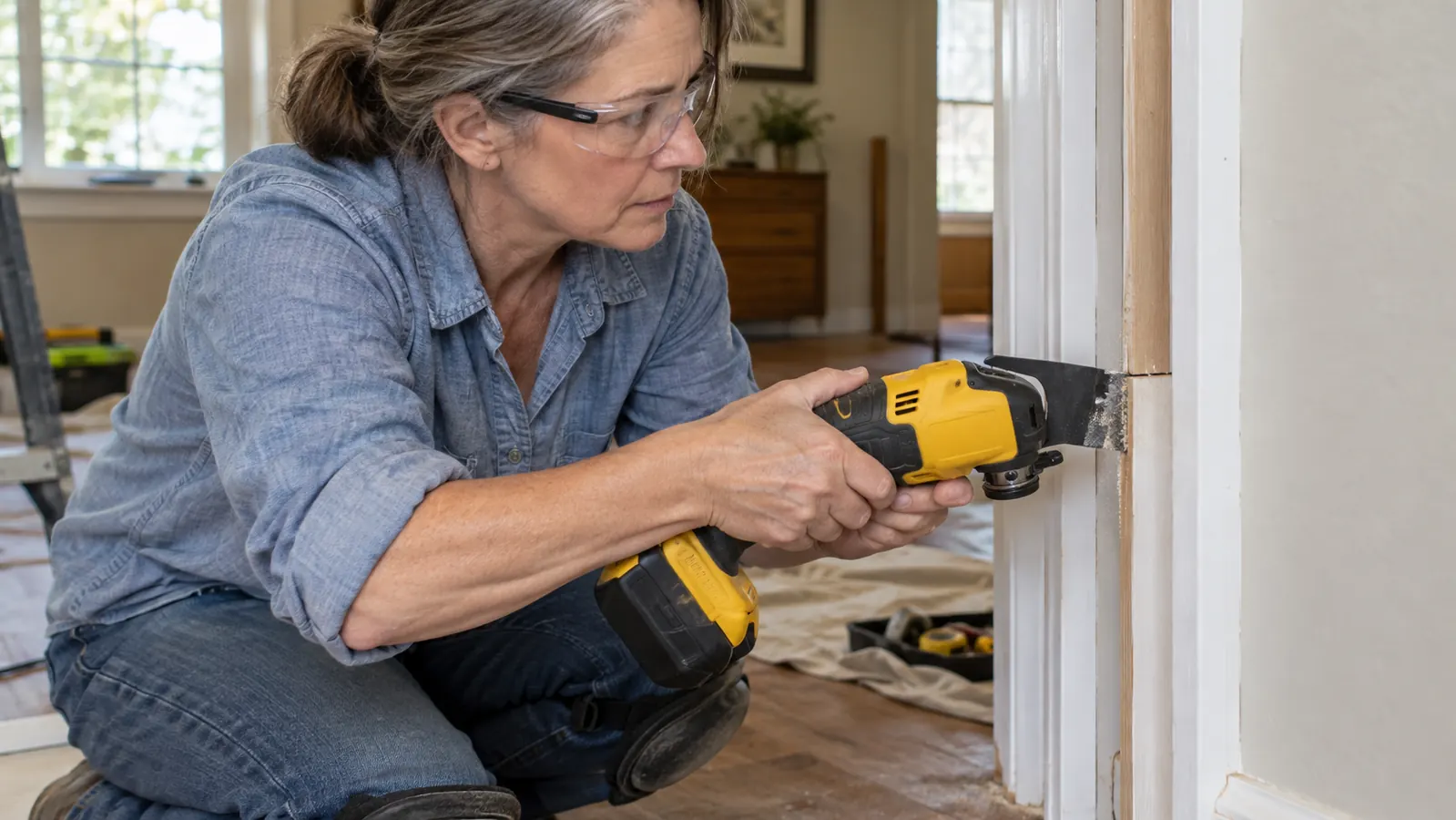
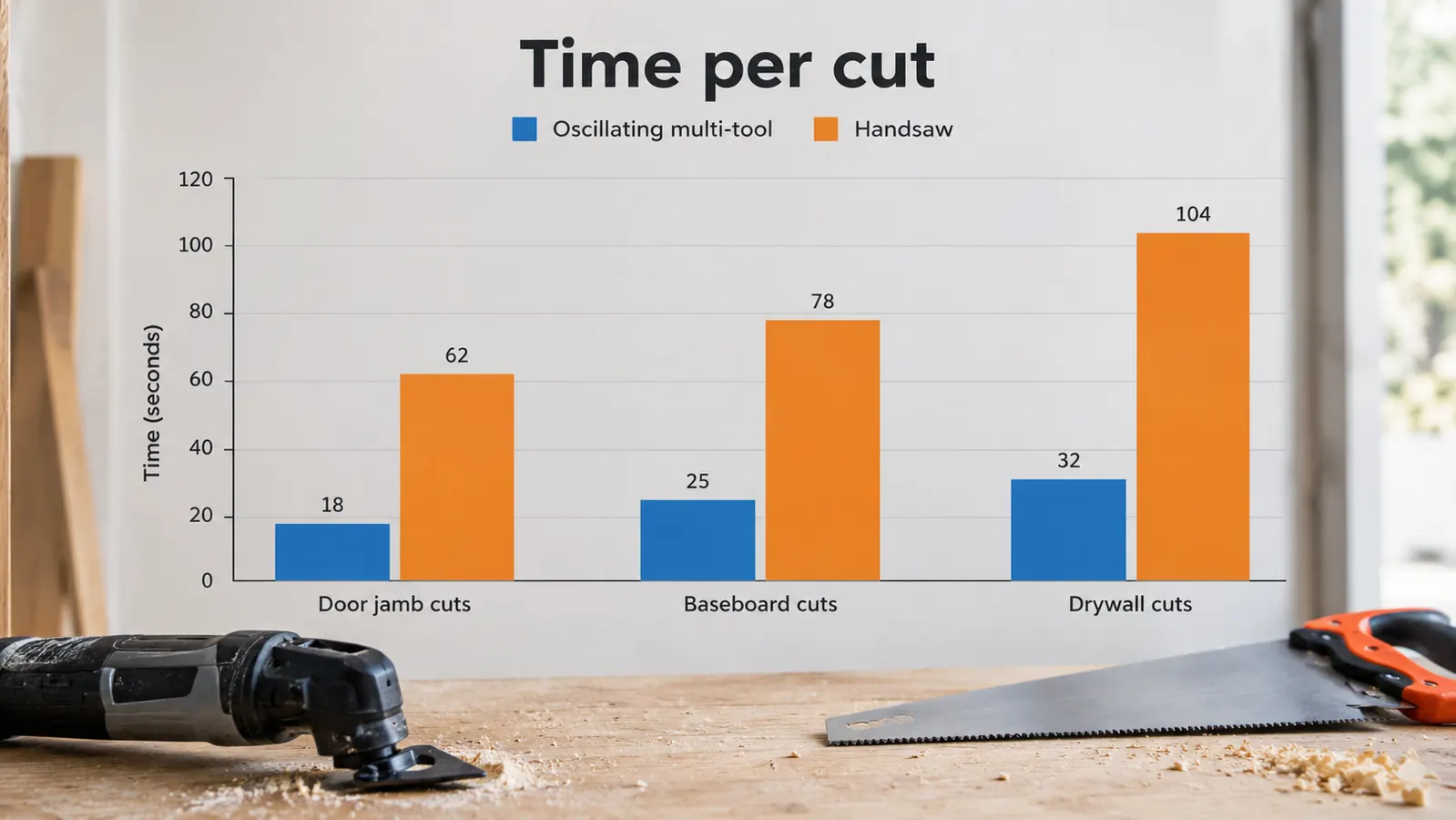
I bought the DEWALT multi-tool kit when I was redoing the trim in my hallway. The old baseboards were nailed to the wall, and the new ones needed to fit around door casings that were already installed. With a handsaw, that meant undercutting each piece at an angle and hoping the gap was small enough to hide with caulk. With the DEWALT oscillating tool, I just held the flush-cut blade against the casing and cut straight through. The first piece took me about four minutes. The second took two.
Since then, I have used it for a lot more than trim. I have cut out a section of drywall to fix a leaky pipe, sanded a window sill that had years of paint buildup, and trimmed a door that dragged on the carpet. I have used the plunge-cut blade to open a hole in the back of a cabinet for a new outlet. I have used the scraper blade to lift old vinyl tile. My husband, who does the heavy lifting and not much else, has started asking to borrow it, which is the highest compliment a tool can get in this house.
The kit I have is the DCS356C1, which comes with the tool, a battery, a charger, and a set of blades. The three-speed dial is something I did not think I needed until I used it. On low speed, the tool is gentle enough for sanding and scraping. On high speed, it chews through a door jamb like the wood is butter. The brushless motor is quiet for a power tool, and the vibration is much less than I expected from a tool that moves this fast.
The first serious job I did with the DEWALT multi-tool was undercutting the door jambs before laying vinyl plank in the living room and hallway. There are six doorways in that part of our 1962 ranch, and every one of them needed the casing and jamb trimmed so the new flooring could slide underneath. I laid a scrap of plank and underlayment on the floor as a guide, rested the flush-cut blade on top of it, and cut each jamb in under a minute. Doing the same job with a hand jamb saw had taken me most of an afternoon on a previous project, and my wrist reminded me for days afterward.
It also earned its keep on demolition. When I pulled out the old bathroom vanity, the backsplash had been glued and caulked to the wall. A scraper blade on the multi-tool sliced through the old caulk and adhesive without gouging the drywall, which saved me a patching job before I could paint.
What the DEWALT Multi-Tool Does Better Than Anything Else
The reason an oscillating multi-tool exists is the flush cut. No other tool in my garage can cut a board flush against a surface without damaging that surface. A circular saw leaves a rounded corner. A handsaw leaves a rough edge and takes forever. The DEWALT multi-tool, with the right blade, leaves a cut so clean that I stopped filling gaps with caulk and started filling them with wood filler, which is a much more professional finish.
The second thing it does better than anything else is plunge cutting. I have used it to cut a square hole in drywall for an outlet box, a round hole in a cabinet back for a pipe, and a slot in a baseboard for a cable. You mark the line, press the blade into the surface, and the tool does the rest. The key is to let the tool do the work and not push hard. When I push, the blade wanders. When I let it oscillate, the cut stays on the line.
The third thing is sanding. The DEWALT multi-tool takes a sanding pad, and the triangular shape gets into corners that a palm sander cannot reach. I used it to sand the corners of my bathroom door after I painted it, and the finish looked like a professional had done it. The hook-and-loop pad holds the sandpaper well, and the dust collection port works with my shop vac, which keeps the garage from looking like a flour mill.
Performance Over Time: What Months of Use Taught Me
I have had the DEWALT multi-tool for about eight months now, and I have used it on at least a dozen projects. The brushless motor has not lost any power. The variable speed dial still clicks through all three settings. The battery, a 20V MAX XR pack, holds a charge well, though I have learned to keep a second battery charged when I am doing a full day of trim work.
The biggest lesson I learned is about blades. The blades that come in the kit are good, but they are not the best for every job. For cutting through nails, I use a bimetal blade. For cutting drywall, I use a drywall blade with a finer tooth pattern. For sanding, I use the sanding pad with 80-grit paper for the rough pass and 120-grit for the finish. Changing blades takes a little practice because the tool uses a universal fit system, but once you get the hang of it, it takes about ten seconds.
The one thing that surprised me is how much the tool vibrates when you are cutting something hard, like a nail or a screw. The DEWALT does a good job of dampening vibration, but it is still there. If you are cutting through a wall and hit a nail, you will feel it in your hand. It is not a dealbreaker, but it is worth knowing before you buy.
The cordless part matters more than I expected. I do a lot of small cuts in places where there is no outlet nearby, like inside a closet when I notched a shelf cleat around a pipe, or on the back porch when I trimmed a rotted section of a window sill. Not having to run an extension cord for a 30 second cut means I actually make the cut instead of putting it off. The battery that came with the kit has handled every job I have thrown at it in one session, and I keep it charged between weekends.
Blades are where the real cost of owning a multi-tool lives. The blades in the kit were enough to get started, but a wood blade dulls quickly if you hit a hidden nail, and I did that more than once in old trim. I keep a couple of spare wood blades and one bimetal blade for anything that might have metal in it. Swapping them on this DEWALT is quick and does not need a separate wrench, which matters when you are halfway up a step stool.
Where the DEWALT Multi-Tool Falls Short
No tool is perfect, and the DEWALT multi-tool has a few honest flaws. The first is the blade change. The universal fit system works, but it is not as quick as the tool-free systems on some other brands. You need to loosen the screw, insert the blade, and tighten the screw. It takes about ten seconds once you are used to it, but it is not a one-handed operation.
The second flaw is battery life on heavy cuts. If you are cutting through a thick piece of hardwood or a stack of nails, the battery drains faster than you expect. I have learned to keep a second battery charged, which is not a big deal if you already own other DEWALT 20V tools. If this is your first DEWALT tool, the single battery in the kit might not be enough for a full day of work.
The third flaw is the dust collection. The port works, but it is not perfect. When I am sanding, most of the dust goes into the shop vac, but some still escapes. When I am cutting drywall, the dust is everywhere no matter what I do. I have learned to tape a plastic sheet over the doorway before I start cutting drywall, which is not the tool's fault, but it is part of the reality of using it.
What I Liked
- Cuts flush against door jambs and casings with a clean, professional finish
- Three-speed dial makes it gentle enough for sanding and aggressive enough for cutting
- Brushless motor is quiet and has not lost any power in eight months of use
- Plunge cuts drywall, cabinet backs, and baseboards with precision
- Works with the DEWALT 20V battery system, so it shares batteries with other tools
- Dust collection port works with a shop vac
Where It Falls Short
- Blade change takes practice and is not tool-free
- Battery drains fast on heavy cuts through hardwood or nails
- Dust collection is not perfect, especially when cutting drywall
- Vibration is noticeable when cutting through nails or screws
The first piece of trim took me four minutes. The second took two. That is the whole story of why this tool belongs on your pegboard.
One last practical note is vibration and noise. Any oscillating tool buzzes in your hand, and after 20 minutes of steady grout removal I wanted a break. Wear hearing protection and safety glasses every time, and let the blade do the work instead of pushing hard. When I pushed, the cut actually got slower and the blade got hotter, which is the opposite of what you want.
After many months, the DEWALT still runs as smoothly as it did out of the box. The speed dial has not loosened, the blade clamp still locks firmly, and the battery still finishes a full Saturday of small cuts. I wipe the dust off the vents after each job and store it in its case on a garage shelf, and that is all the maintenance it has needed. For a tool I reach for on almost every project, that kind of reliability is exactly what I wanted.
Who This Is For
The DEWALT multi-tool is for the DIY homeowner who is tired of fighting with a handsaw. If you are redoing your own trim, cutting your own drywall, or sanding your own corners, this tool will save you hours on every project. It is also for anyone who already owns DEWALT 20V tools, because the battery system means you are not buying into a new platform. And it is for the person who wants a professional-looking finish without hiring a professional. That is exactly the person I was when I bought it.
Who Should Skip It
If you only do one or two small projects a year, you might be better off renting a multi-tool or borrowing one from a neighbor. The DEWALT multi-tool is an investment, and it only pays off if you use it. If you are a professional contractor who needs a tool that can run all day on a single charge, you might want a corded model or a larger battery. And if you hate changing blades, you might prefer a tool with a tool-free system, even if it costs more. The DEWALT is a great tool, but it is not the right tool for everyone.
Ready to stop fighting your trim?
The DEWALT 20V MAX XR oscillating tool is the one I reach for first after months of real remodeling use. Check today's price on Amazon and see why it belongs on your pegboard.
Amazon Check Today's Price on Amazon →