
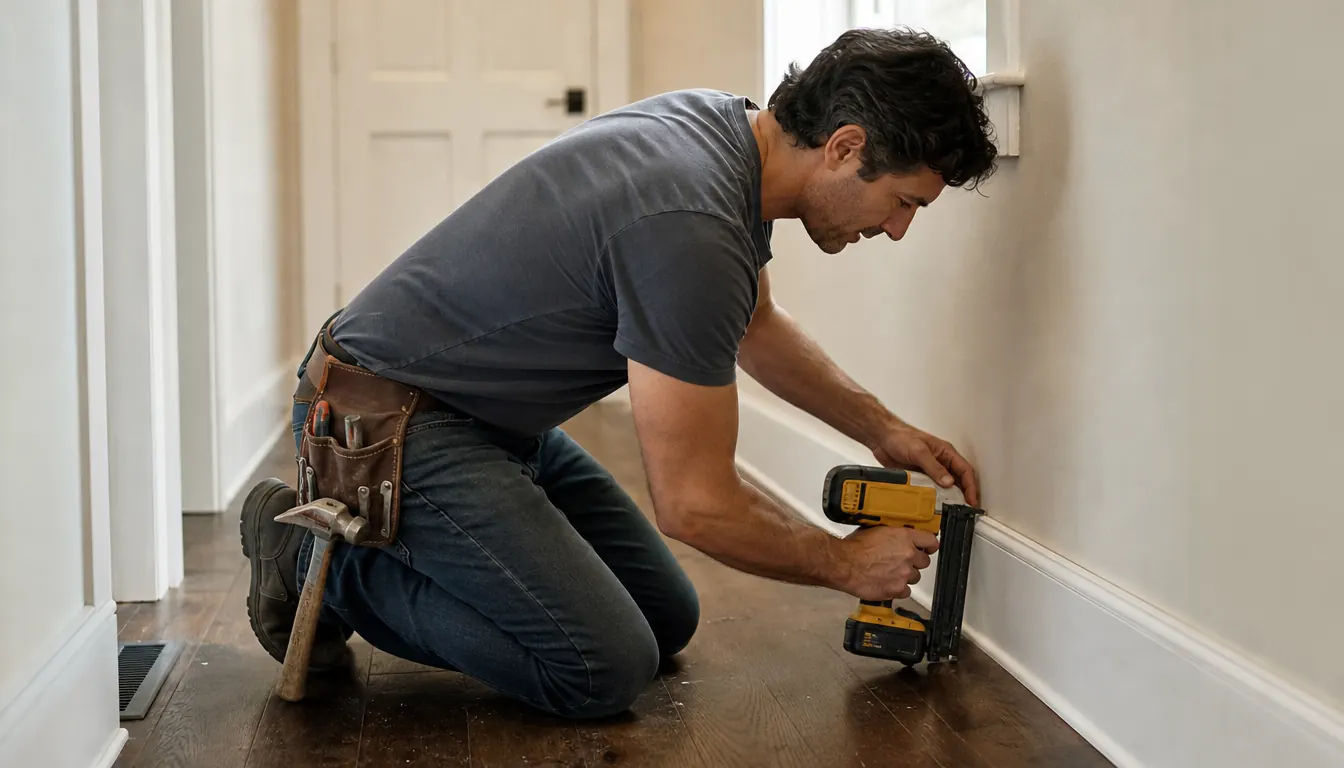
I spent most of last winter running new baseboard through the hallway and both bedrooms of our 1962 ranch. That is the job that finally pushed me to buy a cordless brad nailer, and the one I settled on was the CRAFTSMAN V20, the 18-gauge kit that comes with a battery and charger. I had borrowed a pneumatic brad nailer and a pancake compressor from a neighbor who builds cabinets for the living room trim the year before, so when I made the call I had both approaches fresh in my head. After months of using the cordless on casing, shoe molding, window stops, and a few furniture repairs, here is the honest answer to the question I get asked most often.
If you are a homeowner working through a finished house a few rooms at a time, the CRAFTSMAN V20 is the better tool for you. If you are trimming an entire house in one weekend, or you already own a compressor for other tools, a pneumatic setup is the better value. Cordless wins on convenience. Pneumatic wins on raw power and endurance. Which one matters depends entirely on where and how you work, so let me walk through the comparison the way I actually lived it.
How the Two Compare
| CRAFTSMAN V20 Cordless | Pneumatic Brad Nailer | |
|---|---|---|
| Driving power | Seats 18-gauge brads flush in pine, poplar, and MDF; in dense oak it can leave a head a hair proud of the surface. | More consistent driving force, seats nails flush even in oak and hickory at a steady compressor setting. |
| Portability | Grab it and go, up a ladder, into a closet, out to the porch, no cord and no hose to drag. | You carry the tool plus a compressor, an extension cord, and a coil hose, and you stay within hose reach of an outlet. |
| Setup and cleanup | Battery in, battery out, done in under a minute. | Hose up, plug in, fill the tank, let pressure build, and drain the tank when you finish. |
| Noise | A single pop when the nail drives, quiet enough for a room where someone is sleeping. | The pop plus the compressor cycling on and off, which gets old fast in a finished house. |
| Endurance on long runs | A few hundred nails per charge, so you swap batteries on a full-day trim job. | Unlimited air as long as the compressor runs, no battery swap mid-run. |
| Upfront investment | The kit includes a battery and charger, and you are paying for that convenience. | A basic pancake compressor and a pneumatic nailer cost less to assemble than a cordless kit. |
| Maintenance | Wipe it down, keep the battery charged, hang it on a pegboard, that is about it. | Oil the tool, drain water from the tank, and keep an eye on the hose and fittings. |
| Weight in hand | The battery adds noticeable heft, fine for trim work but tiring overhead. | The bare tool is lighter and easier to maneuver in tight spots. |
| Learning curve | Point, press, and it drives, no pressure settings to dial in. | You set the compressor pressure and tune the tool as the tank pressure drops. |
| Best for | Baseboards, casings, window stops, and shoe molding in a lived-in house, one room at a time. | Production work, new construction, or a whole house of trim in a single weekend with a compressor on hand. |
The Job That Made Me Compare Them
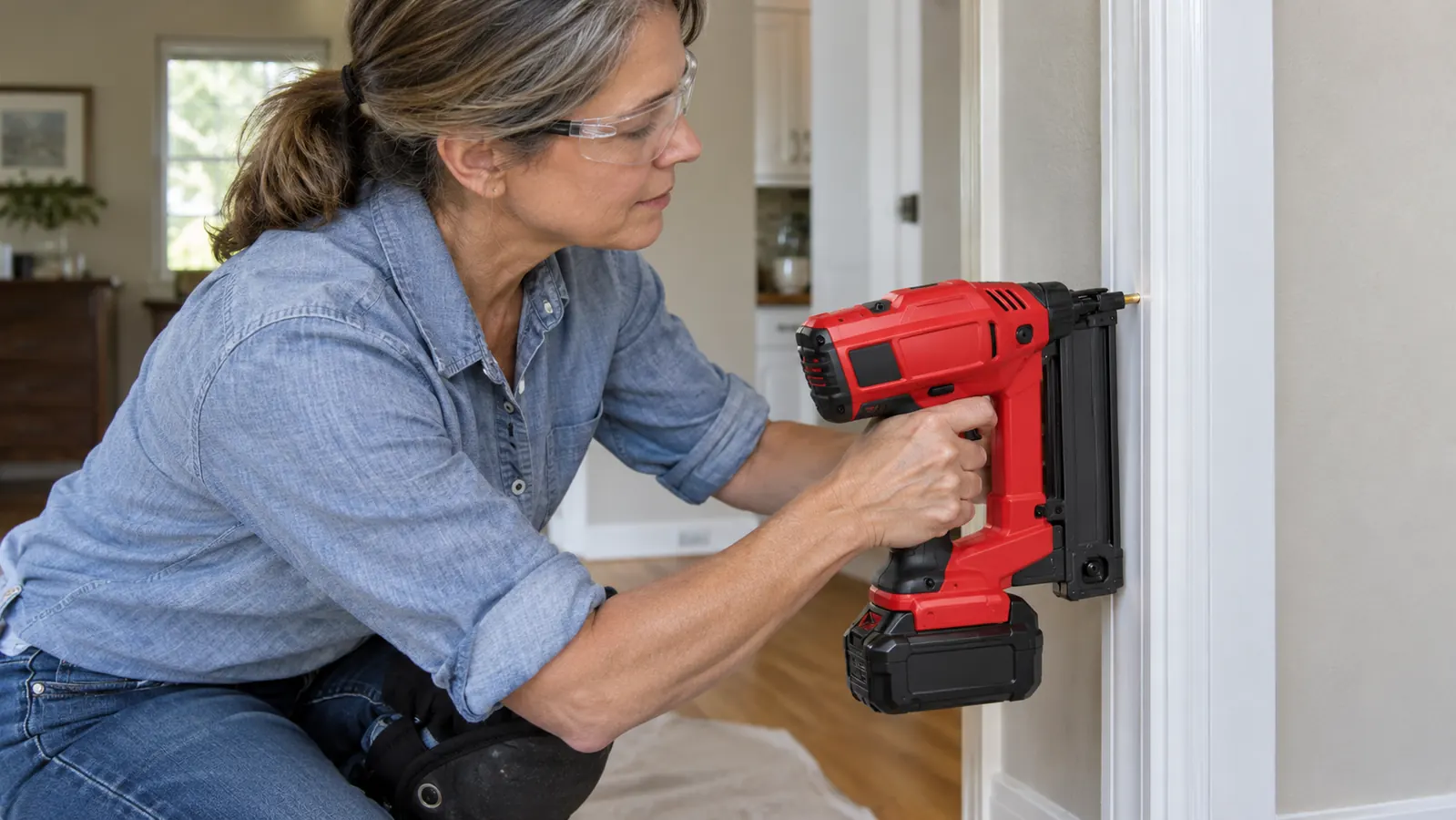
Our house is a 1962 single-story ranch, about 1,600 square feet, and I have been working through it room by room for the better part of fourteen years. The trim was the last thing to look dated: thin colonial baseboard, scuffed door casings, and corner joints that had been painted over so many times the paint was doing the structural work. I spent years as an interior design assistant, so I notice that stuff, and I wanted the clean, modern profile you see in new builds. That means pulling the old trim and running fresh primed MDF baseboard and casing, which is exactly the job a brad nailer is for. It is also a lot of nails.
For the living room, I borrowed a pneumatic brad nailer and a pancake compressor from a neighbor who builds cabinets. It worked beautifully, and it taught me everything I disliked about the setup. For the hallway and both bedrooms, I used the CRAFTSMAN V20. Same baseboard, same casing, same me, the only variable was the tool. That is the comparison I am walking through here, and I think the results would hold up for anyone doing the same kind of work in their own house.
Where CRAFTSMAN V20 Wins
The biggest difference is not how the nail goes in, it is everything around the nail. With the V20, I carry one tool from room to room and it is ready the second I pick it up. With the borrowed pneumatic, I hauled the compressor out of the garage, ran an extension cord down the hall, and untangled a 25-foot hose every time I moved to a new wall. For baseboard, that meant ten minutes of setup and takedown on top of every session, and I worked in twenty-minute windows after dinner. The cordless erased all of that friction, which is exactly what a weekend remodeler needs.
The second difference is noise, and it matters more than people expect. A pneumatic brad nailer is not loud by construction standards, but the compressor cycling on in a quiet hallway gets old fast. The V20 just pops when the nail drives, and that is the whole sound. I could nail up casing in the bedroom while my husband watched television in the next room without driving each other crazy. Maintenance is another quiet win. The cordless gets wiped down, kept charged, and hung on my pegboard. The pneumatic needed oil in the tool, water drained from the tank, and a careful eye on the hose every time I rolled it up.
Working alone is where the cordless CRAFTSMAN made the biggest difference for me. Baseboard is awkward to hold in place by yourself, especially the long 12 and 14 foot runs in the hallway. With the pneumatic, I kept stepping on the hose or feeling it tug the gun sideways just as I fired, and twice it pulled a nail off line and I had to fill a hole in a freshly painted board. With the cordless tool I could press the trim tight to the wall with one hand and fire with the other, then move a foot down the wall without dragging anything behind me.
Setup and cleanup time adds up too. With the pneumatic, every session started with hauling the compressor in from the garage, waiting for it to fill, and unwinding the hose, then ended with draining the tank and coiling everything back up. On a weeknight when I only had an hour to nail up one wall, that routine ate a real chunk of it. With the CRAFTSMAN I clip in the battery and start.
Where a Pneumatic Wins
I am not going to pretend the cordless wins everything, because it does not. The pneumatic drove nails with more authority. In the oak threshold and in the hardest sections of the old fir door casings, the V20 sometimes left a brad sitting a hair proud of the wood, and I had to follow up with a nail set to seat it flush. The pneumatic drove the same nails flush on the first hit. And on a long day of nailing, air keeps coming as long as the compressor runs. The cordless needs a battery swap eventually, which is a non-issue for a few rooms but a real interruption on a full-house run.
The other honest concession is the cost of getting in. A basic pancake compressor and a pneumatic brad nailer cost less to assemble than a cordless kit with its battery and charger, and the bare pneumatic tool is lighter in your hand. That weight difference matters when you are reaching overhead with crown or nailing all day. If I already owned a compressor for other tools, I would have to think hard about whether the cordless convenience was worth the premium. For someone starting from nothing, the cordless kit is the simpler single purchase, but the pneumatic route stretches your dollar further if you are willing to live with the hose.
Sustained speed is the other place the pneumatic pulls ahead. When I was nailing a long run of shoe molding, the borrowed pneumatic fired as fast as I could pull the trigger, while the cordless tool has a brief pause as it cycles. For a homeowner doing one room at a time, that pause never slowed me down in any way I noticed, but someone nailing trim all day would feel it.
The cordless that earned its spot on my pegboard
For trim work in a lived-in house, the CRAFTSMAN V20 kit with battery and charger means you never think about a compressor again. It holds a 4.6-star average across more than 3,000 reviews, and after a winter of baseboard and casing, I understand why.
Amazon Check Today's Price on Amazon →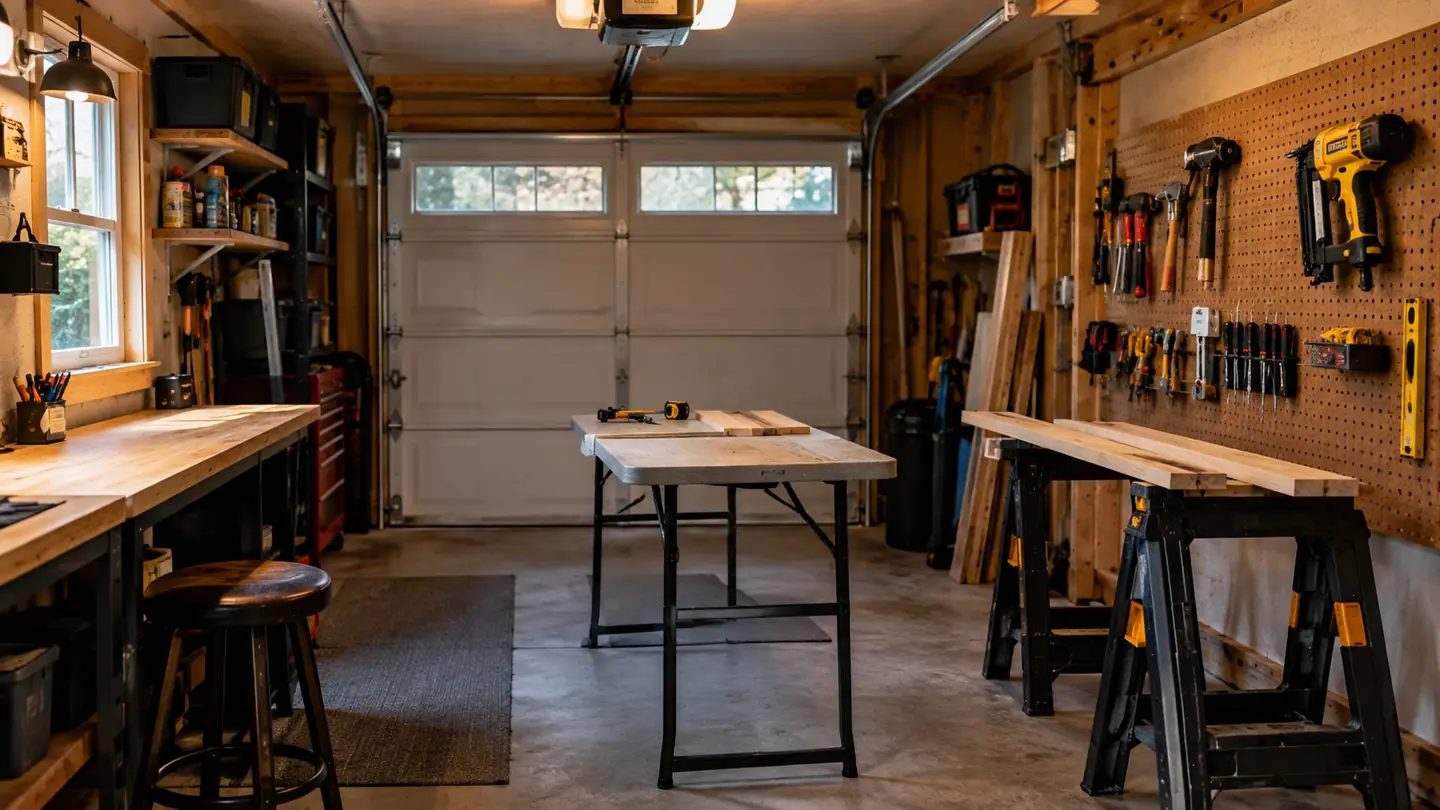
A Few Things to Know Before You Buy
Before you order anything, it helps to know what an 18-gauge brad nailer is actually for. It drives thin, headless nails that leave a pinhole you can fill with a dab of spackle, which makes it the right tool for baseboard, door casing, window stops, shoe molding, and any trim you want to look clean. It is not a framing nailer and it is not a finish nailer. Sixteen-gauge is the step up if you are hanging solid wood casings or thick crown, and a framing nailer is a different category entirely. If your list is trim, the 18-gauge size is the sweet spot, and the V20 handles it well.
Two small things surprised me. First, the depth adjustment is worth setting before you start a run of trim. The V20 has a dial on the nose that controls how deep the brad seats, and once I set it for the baseboard thickness I was using, every nail landed the same. Second, the no-mar tip protects the wood surface, and the dry-fire lockout stops the tool from firing on an empty magazine, which keeps you from hammering a pin into a wall with no nail in it. Those details sound small, but they are the difference between a tool that feels professional and one that fights you.
One more practical note on the battery. The kit includes a battery and charger, and on a single charge I got through a full room of baseboard and casing, which was a few hundred nails. I charged it overnight and never ran out in the middle of a session, but if you plan to trim the whole house in a day, a second battery is worth having. The charger is quick enough that a lunch break covers a swap, and the tool uses the same V20 battery as the rest of the CRAFTSMAN 20-volt line. If you already own other tools in that family, you are ahead before you start.
One more thing worth knowing is that brads are cheap and easy to find. Any hardware store carries 18-gauge brads in the lengths you will use most, so you never have to track down a specialty supply. I keep a box of one-inch brads for casing and shoe molding, and a box of the longer size for baseboard, and that covers almost everything in my house.
Who Should Buy Which
Buy the CRAFTSMAN V20 if you are a homeowner working through a house one room at a time: baseboards, casings, window trim, shoe molding, and the occasional shelf or picture frame. Buy a pneumatic setup if you are trimming a whole house in a single push, if you already own a compressor, or if you work in a shop where the noise and the hose do not bother anyone. Neither is wrong. They are answers to different questions.
For me, the deciding question is how often you work and where. I trim one room at a time, in the evenings, inside a house where people are trying to sleep. The cordless is worth it for that alone. If I were running trim for a living, or if I had a big air compressor in the garage for other tools, I would own a pneumatic and never look back. The V20 is the better fit for the way I actually live and work.
The Bottom Line
If I had to give one piece of advice to someone standing in the tool aisle trying to make this same decision, it would be this: decide based on where you will be standing when you use it. In a finished house, in the evenings, one room at a time, the CRAFTSMAN V20 is the tool that will actually get used. On a job site, or in a shop with a compressor already humming, the pneumatic is the workhorse. Both are good tools. The right one is the one that matches your reality.
The one I reach for every time I cut a piece of trim
After a full season of baseboard, casing, and shoe molding, the CRAFTSMAN V20 cordless brad nailer is the tool that stays on my pegboard. If you are working through your own house one room at a time, it will probably end up being the same for you.
Amazon Check Today's Price on Amazon →